
Results
They had insurance. Here is what it took to come back.
Three fires, three owners, and the coverage and planning that decided whether each business reopened.
Start a conversationThe Employer Success ProgramAll three of these owners had insurance. Each one found out after the fire whether it was the right insurance. These are their stories, and what we had changed before anything happened.
Manufacturing · Apollo, Pennsylvania
CCF Industries: everyone got out
Three weeks before the fire, CCF had no evacuation plan. The plant had a fire alarm but nothing you could hear inside, so our safety professional mounted air horns on the walls and built the plan around them. They ran four drills.
A little after seven on an April morning in 2014, a spark lit a spray booth filter and the dust collector pulled the burning particles into the ducts. In less than ten minutes the roof was coming down. All 33 employees were already outside.
His insurance had been rebuilt too. Under his old program, Ken Clifton would have been about $1.3 million short just to rebuild, and more than $2 million short of what it took to keep the business going and hold onto his customers while he did. It was an $8.3 million loss. CCF was closed for 13½ months, and it is still in business today.
I could not help but think that if I was still with that old program, I would be out of business today.
Ken Clifton, Owner, CCF Industries
Truck and auto body repair
Kirsopp Auto Body: the adjuster said to put everyone on unemployment
The fire started in a three-year-old furnace on the night of November 14, 1997. It brought down the roof and most of the walls and destroyed everything inside, trucks included.
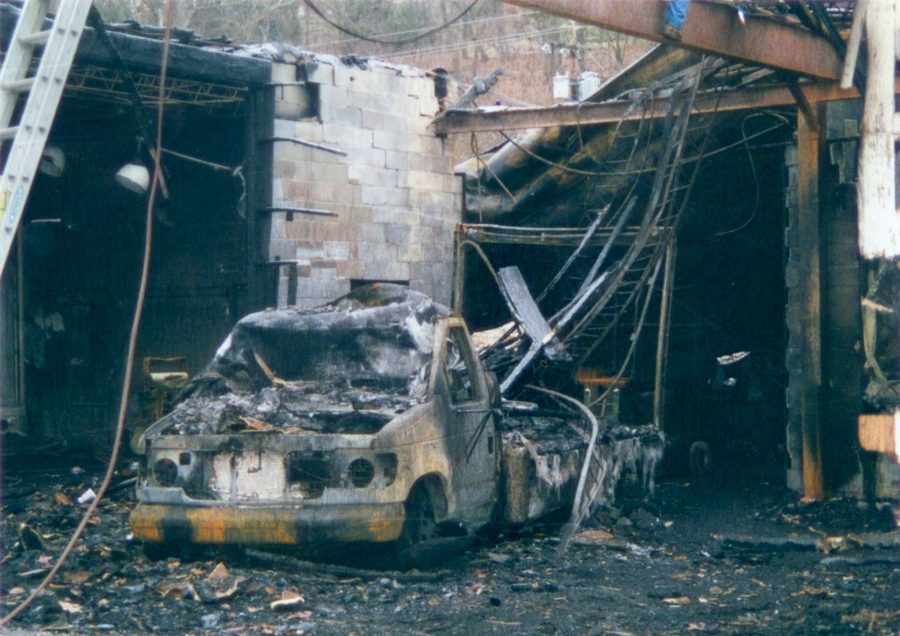
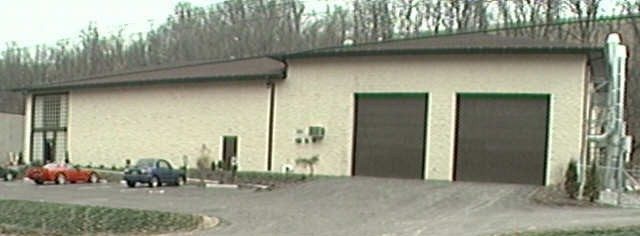
A month later the adjuster told Jack Kirsopp to lay off his 18 people and let them file for unemployment. It would save the insurance company money. Most of them had been with him more than 15 years, and good body mechanics who can work on tractor-trailers are hard to find. We said no. Six months earlier we had written his business income coverage to include ordinary payroll for every one of them. Nobody missed a paycheck in the 9½ months it took to rebuild.
What saved the building was what we found before the fire. His old agent had it insured for $274,000, and every agent who quoted it copied that number. It would have cost $865,000 to rebuild. It also sat in a floodplain and too close to the property line, so the rebuild had to be raised and moved, with a sprinklered spray booth the code now required. We put that code gap at close to half a million dollars and added the coverage.
It still didn't go perfectly. Soft soil under the new site needed caissons driven 18 feet to rock, and after the fire the town passed an ordinance requiring a decorative front that the forms of the day couldn't cover. Jack paid about $80,000 out of pocket on a $3.5 million fire. He reopened to a backlog of work, and his daughter owns the business today.
The outcome was beyond belief. Because of Duncan's efforts, which go well beyond quoting your insurance, not one of my employees or myself missed a paycheck. My business, in its beautiful new facility, is thriving and I am now able to hand this company over to my daughter and eventually my grandson.
Jack Kirsopp, Owner, Kirsopp Auto Body
Auto repair · 8 employees
An auto repair shop: the walls that never burned had to come down too
On a Sunday in June 2004, Tony Vecchio came in to weld a patch under a friend's pickup. He did his 45-minute fire watch and walked across the street for lunch. Half an hour later the waitress ran over. Smoke was pouring out of his building. The roof fell in and pushed the front wall out.
Tony moved fast. Within three weeks he was working out of a closed repair shop half a mile down the road. Then the code officer looked at the building. With the front wall and roof gone and the foundation cracked, the whole structure had to come down and be rebuilt, including the three walls that never burned. The undamaged portion came to about $204,000, and tearing it down added another $38,000. A standard property policy pays for neither.
Before the fire, two of the programs Tony compared looked almost the same. One had $50,000 for all of his building code costs. The other covered the undamaged portion up to the full building limit, plus demolition and code upgrades, for about $1,000 more a year. Tony took it. Under the cheaper one he would have been about $192,000 short. He was back in his own building in about 9½ months.
What would it take to bring yours back?
Most owners have never checked. The building limit, the code costs, how long the payroll and the bills keep coming before the customers come back. A good year doesn't answer any of that.
Book 30 minutes with David Insured to Fail, the book these stories come from
Start with a conversation
Tell me about your building and your business. I read these myself and reply within two business days.
Rather pick a time now? Book a 30-minute call on my calendar. It's on Teams.